Health Insights
Explore Our Resources


Articles in Nephrology
Learn what protein in your urine can mean, what a UACR test measures, and why urine albumin is …

October is National Physical Therapy Month, an opportunity to recognize the role physical therapy plays in helping people …
Today, September 29, marks World Heart Day, a global day dedicated to raising awareness about cardiovascular health. The …
Kidney stones are hard deposits made from minerals and salts that form inside the kidneys. They can vary …

Every year on September 8th, World Physiotherapy Day highlights the important role physiotherapists play in helping people improve …
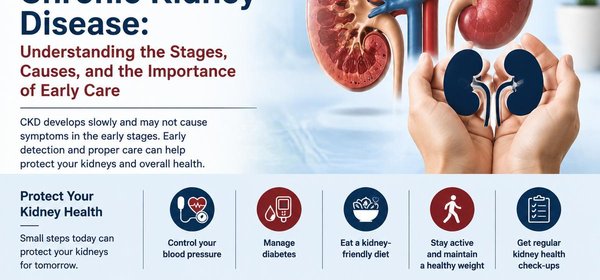
The kidneys play a vital role in maintaining overall health. They filter waste and extra fluid from the …
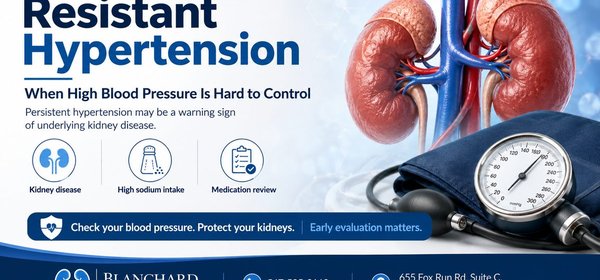
When blood pressure remains high despite treatment, there may be more going on than ordinary hypertension. Resistant hypertension …
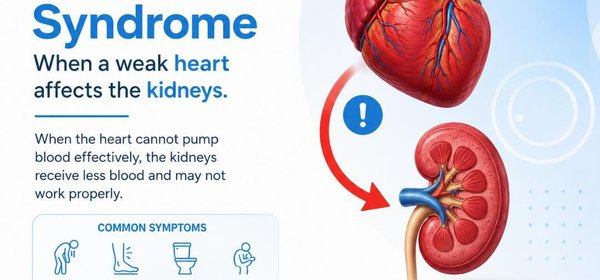
The heart and kidneys work together to keep the body healthy. The heart pumps blood to deliver oxygen …
Explore about nephrology
 and kidney health.
Explore expert insights
Engage with the community
Submit your own insights

Frequently asked questions
Chronic kidney disease (CKD) is a gradual, progressive condition where the kidneys suffer damage over time and lose their ability to properly filter the blood. Approximately 26 million adults in the U.S. have CKD and millions more are at risk. In the early stages, you may not know your kidneys are not working optimally because they have a remarkable ability to compensate. High risk groups include those with diabetes, hypertension (high blood pressure), and family history of kidney disease. Early detection and treatment to manage CKD can slow the progression of the disease and prevent kidney failure so it is critical to be tested routinely if you are in a high risk group.
Is it important to find CKD early?
Early detection of CKD is extremely important, as the goal in treating CKD is first of all identification of the cause of the decline, then slow progression and prevent the need for dialysis down the road. This is accomplished through aggressive treatment of the underlying diseases causing CKD. The most common cause of CKD is diabetes followed by hypertension (high blood pressure).
How do I know if I have CKD?
Chronic Kidney Disease can easily be found by drawing simple lab tests, such as a metabolic panel. Within a metabolic panel, the marker that is primarily used to evaluate your kidney function is creatinine. Creatinine is a byproduct of muscle use and is cleared by the kidneys. Based on your creatinine we are able to measure your kidney function. Blood urea nitrogen (another waste product of the body) is also used along with creatinine as a marker of kidney function.
If you believe you have any of these symptoms, talk to your doctor about your concerns. This is especially important if you have a close family member who has kidney disease, or if you have diabetes or high blood pressure, which are the main causes of kidney failure.
How do I know if I have CKD?
- Changes in urination
- Fatigue or weakness
- Ammonia breath or an ammonia or metal taste in the mouth
- Loss of appetite
- More hypoglycemic episodes (if diabetic)
- Swelling of the feet, ankles, hands or face
- Shortness of breath
- Generalized Itching
- Nausea and vomiting
Chronic kidney disease (CKD) is a gradual, progressive condition where the kidneys suffer damage over time and lose their ability to properly filter the blood. Approximately 26 million adults in the U.S. have CKD and millions more are at risk. CKD is measured based on GFR—Glomerular Filtration Rate, which is a mathematical method that measures the kidney function based on your creatinine level, your age, your sex and your race. Based on your level of GFR, you will fall into one of the five different stages as noted.
Symptoms of Stage 5 Kidney Disease
- Nausea, vomiting
- Poor appetite, as well as taste abnormalities
- Anemia with associated weakness
- Worsened swelling of legs, body
- Blood pressure difficult to control
- Potassium and other electrolytes become difficult to control
Stages of Chronic Kidney Disease (CKD)
One
Kidneys function normally but there is proteinuria (protein in the urine) present. This is an indication of future inhibited kidney function. GFR >90 (normal kidney function but with some evidence of damage)
Two
Kidney function is greater than 60%. Proteinuria may or may not be present. GFR 60-89 (mild disease)
Three
Kidney function is at 30-59%. GFR 30-59 (moderate disease)
Four
Kidney function is at 15-29%. GFR 15-29 (severe disease)
Five
Kidney function is below 15% and the patient may require dialysis at any time based upon certain symptoms. This requires very close supervision since this stage is a very critical time. Dialysis is typically recommended. GFR <15 (kidney failure/End Stage Renal Disease)
Hypertension is the medical term used to describe high blood pressure. Hypertension is the second most common cause of Chronic Kidney Disease (CKD) and progression to End Stage Renal Disease (Kidney Failure) with diabetes being the most common cause for Chronic Kidney Disease and progression to End Stage Renal Disease. At the same time, about 80% of patients with chronic kidney disease will eventually develop hypertension. To find more information about your personal medical records with us, click here.
REGULAR KIDNEY FUNCTION
The largest function of the kidneys is to “filter out” the blood stream. Beyond this, the kidneys also help us regulate other processes in the body. One of these processes is blood pressure. Thus, the kidneys have the ability to raise or lower your blood pressure and accomplish this by releasing a hormone called Renin. Renin’s job, once released from the kidneys, is to trigger a cascade of other hormones with the end result being constriction of your blood vessels. This hormone cascade system is known as the Renin-Angiotensin-Aldosterone System (RAAS). We use different medication that target these pathways and other pathways in the treatment of resistant or secondary hypertension.
FUNCTION WITH CHRONIC KIDNEY DISEASE (CKD)
The kidneys release renin in response to sensing decreased blood flow to their functional units, the glomeruli (the kidneys are composed of millions of these functional units which are the small “filters” that clean out the blood stream). In Chronic Kidney Disease (CKD), there is an increased loss of these filters beyond the normal loss we all experience beyond the age of 40. This loss of functional units can contribute to elevated blood pressure over time, but high blood pressure in itself can precipitate further loss of functional units. A unique situation.
MEDICATIONS
Many of the medications that combat high blood pressure work by inhibiting certain components of the RAAS system. In turn, by utilizing these medications, we can effectively lower blood pressure and also increase renal (kidney) protection which is the goal in CKD.
News in Nephrology
Focused on issues related to the nephrology match, workforce, compensation, training, and mentoring, ASN supports all paths to …

Kidney News is your source for information in the kidney world. From workforce trends to scientific advances, the …
Permissions Editorial Antivirals in Herpes Zoster and AKI Old Foes, New Insights Kwong, Yuenting Diana; Hsu, Raymond K. …
Kwong, Yuenting Diana; Hsu, Raymond K.