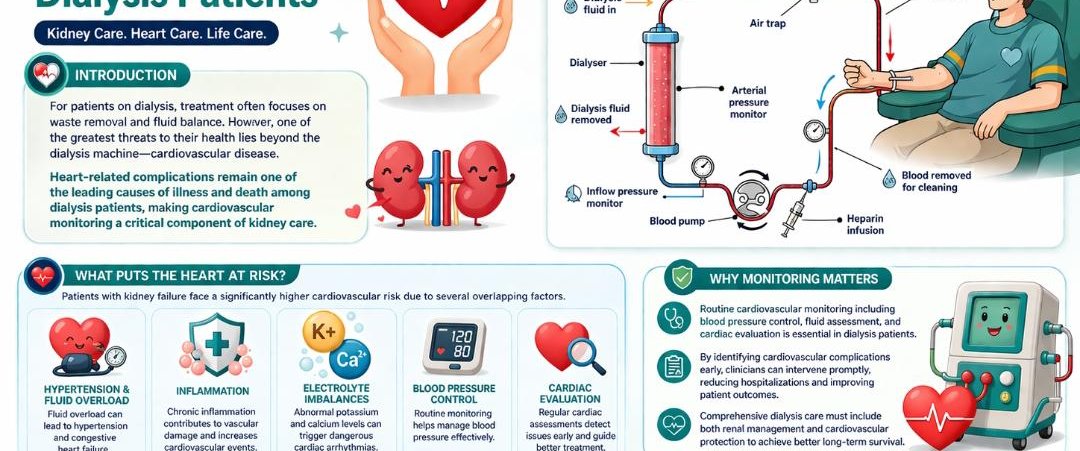
Heart-related complications remain one of the leading causes of illness and death among dialysis patients, making cardiovascular monitoring a critical component of kidney care.
Content
Patients with kidney failure face a significantly higher cardiovascular risk due to several overlapping factors. These include hypertension, chronic fluid overload, anemia, inflammation, and mineral imbalances.
Even when dialysis treatment is adequate, these factors continue to place immense strain on the heart and blood vessels. Fluid overload can lead to hypertension and congestive heart failure, while chronic inflammation contributes to vascular damage and increased cardiovascular events.
Additionally, electrolyte imbalances such as abnormal potassium and calcium levels can trigger dangerous cardiac arrhythmia. This is why routine cardiovascular monitoring including blood pressure control, fluid assessment, and cardiac evaluation is essential in dialysis patients.
By identifying cardiovascular complications early, clinicians can intervene promptly, reducing hospitalizations and improving patient outcomes.
Comprehensive dialysis care must therefore include both renal management and cardiovascular protection to achieve better long-term survival.
Conclusion
Dialysis care should go beyond kidney support alone. Cardiovascular monitoring is essential for reducing complications and improving quality of life in dialysis patients.
At Blanchard Nephrology , we emphasize a holistic approach to kidney care because protecting the heart is an essential part of protecting the kidneys.