Polycystic Kidney Disease (PKD) is a genetic condition in which multiple fluid-filled sacs called cysts develop inside the kidneys. Over time, these cysts enlarge and interfere with normal kidney function.
PKD is one of the common inherited kidney disorders and can gradually lead to chronic kidney disease or kidney failure if not properly managed.
What Happens in Polycystic Kidney Disease?
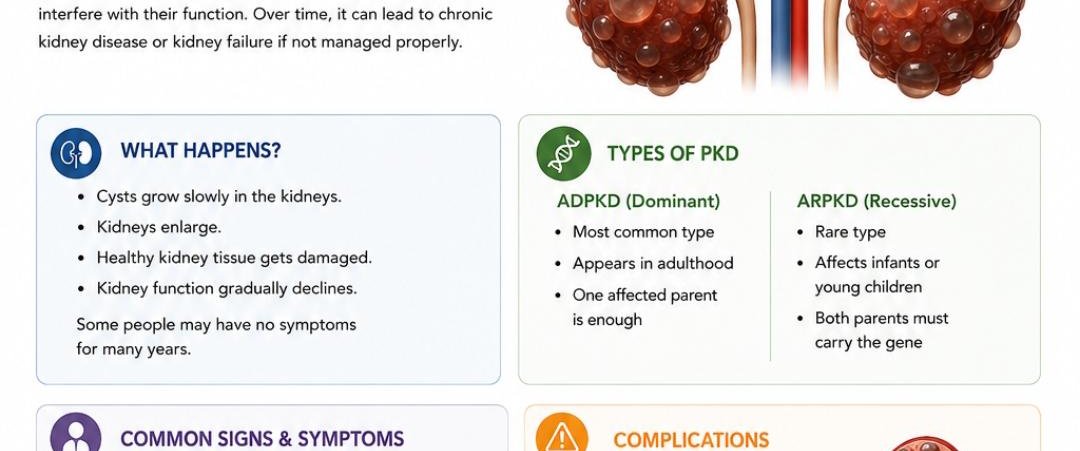
In PKD, cysts grow slowly within the kidneys. As the cysts increase in size and number:
* The kidneys enlarge
* Healthy kidney tissue becomes damaged
* Kidney function gradually declines
Some patients may remain symptom-free for years before signs begin to appear.
Types of Polycystic Kidney Disease
Autosomal Dominant PKD (ADPKD)
This is the most common form and usually appears in adulthood. A person only needs one affected parent to inherit the disease.
Autosomal Recessive PKD (ARPKD)
This is a rarer form that often affects infants or young children. Both parents must carry the gene.
Common Signs and Symptoms
Patients with PKD may experience:
* High blood pressure
* Flank or back pain
* Blood in urine
* Frequent urinary tract infections
* Kidney stones
* Abdominal swelling
* Headaches
* Progressive kidney dysfunction
Some patients are diagnosed accidentally during imaging studies.
Why Does High Blood Pressure Occur?
Damaged kidneys play an important role in the development of hypertension. High blood pressure is very common in PKD and can worsen kidney damage if left uncontrolled.
Regular blood pressure monitoring is extremely important.
Complications of PKD
Possible complications include:
* Chronic kidney disease
* Kidney failure
* Recurrent infections
* Kidney stones
* Liver cysts
* Brain aneurysms in some patients
Early medical follow-up helps reduce complications.
How Is PKD Diagnosed?
Diagnosis may involve:
* Kidney ultrasound
* CT scan or MRI
* Kidney function tests
* Urinalysis
* Family history evaluation
* Genetic testing in selected cases
Imaging studies often show enlarged kidneys with multiple cysts.
Treatment and Management
There is no complete cure for PKD, but treatment focuses on slowing disease progression and managing complications.
Lifestyle Measures
* Adequate hydration
* Low salt intake
* Regular exercise
* Avoid smoking
* Maintaining healthy body weight
Medical Management
Doctors may prescribe:
* Blood pressure medications
* Pain management
* Antibiotics for infections
* Medications aimed at slowing cyst growth in selected patients
Advanced Disease
Some patients with severe kidney failure may eventually require:
* Dialysis
* Kidney transplantation
Living With PKD
Patients with PKD should:
* Attend regular follow-up clinics
* Monitor blood pressure frequently
* Avoid unnecessary painkillers
* Stay hydrated
* Seek early treatment for urinary symptoms
Conclusion
Polycystic Kidney Disease is a lifelong condition that can significantly affect kidney health over time. Early diagnosis, proper monitoring, and healthy lifestyle choices can help slow progression and improve quality of life.
Persistent flank pain, blood in urine, or uncontrolled blood pressure should never be ignored.