Feeling tired after a long day is normal. But persistent fatigue, weakness, dizziness, or shortness of breath can sometimes have a medical cause that deserves attention.
For people living with chronic kidney disease (CKD), one possible cause is anemia.
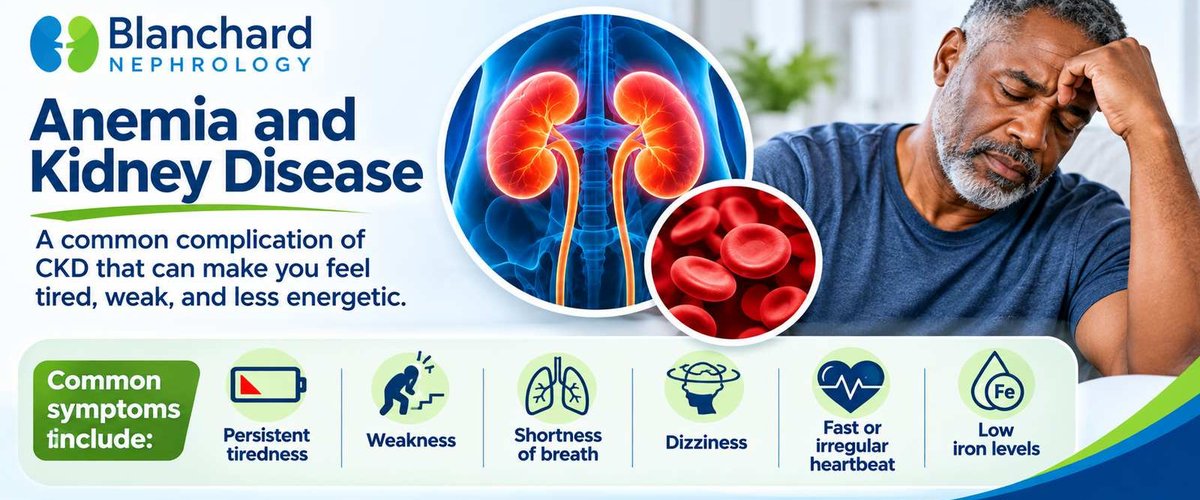
Anemia occurs when the blood does not have enough healthy red blood cells or enough hemoglobin to carry oxygen efficiently throughout the body. It is a common complication of CKD, particularly as kidney disease becomes more advanced.
Understanding the connection between your kidneys and your blood can help you recognize why your healthcare team may order regular blood tests and monitor your hemoglobin and iron levels.
What Do Your Kidneys Have to Do With Red Blood Cells?
Your kidneys do more than filter waste from your blood.
Healthy kidneys produce a hormone called erythropoietin or EPO, which signals the bone marrow to make red blood cells.
When the kidneys become damaged, they may produce less EPO. As a result, the body may make fewer red blood cells, reducing the amount of oxygen delivered to tissues and organs.
CKD-related anemia can have more than one cause. In addition to reduced EPO production, people with CKD may experience iron deficiency, inflammation, blood loss or low levels of nutrients such as vitamin B12 or folate.
This means that simply assuming that fatigue is "just part of kidney disease" may overlook a treatable problem.
What Does Anemia Feel Like?
Anemia can develop gradually and some people may have few or no symptoms when it is mild.
Possible symptoms include:
- Persistent tiredness
- Weakness
- Shortness of breath
- Dizziness or lightheadedness
- Headaches
- Pale skin
- Difficulty concentrating
- Reduced energy
- A fast or irregular heartbeat
The symptoms can vary from person to person. Some may not notice a significant change until anemia becomes more pronounced.
Because many of these symptoms can also occur with other health conditions, testing is important.
How Is Anemia Diagnosed?
Your healthcare provider may use several blood tests to determine whether anemia is present and to help identify its cause.
Hemoglobin
Hemoglobin is the protein in red blood cells that carries oxygen.
A low hemoglobin level can indicate anemia, although the appropriate interpretation depends on the individual and the clinical situation.
Complete Blood Count
A complete blood count (CBC) provides information about your red blood cells, hemoglobin, and other components of your blood.
Ferritin
Ferritin provides information about the amount of iron stored in the body.
Transferrin Saturation
Transferrin saturation, or TSAT, helps show how much iron is available for use in making red blood cells.
Healthcare professionals may evaluate hemoglobin, ferritin, TSAT and other results together rather than relying on one number alone.
Why Iron Matters
Iron is essential for producing healthy red blood cells.
Some people with CKD develop iron deficiency because they do not absorb enough iron, lose blood, have increased iron requirements or experience other changes associated with kidney disease and its treatment. People receiving dialysis may also lose iron during treatment.
If testing shows that iron deficiency is contributing to anemia, your healthcare provider may recommend iron treatment.
Iron can be given orally or in some circumstances, intravenously.
However, iron supplements are not appropriate for everyone. Taking iron without first determining whether you need it can be unnecessary or potentially harmful.
Your kidney care team can determine whether iron treatment is appropriate based on your laboratory results and overall health.
How Is Anemia in CKD Treated?
Treatment depends on the cause and severity of the anemia.
Your healthcare provider may first address an underlying problem such as iron, vitamin B12 or folate deficiency. Nutrition may also be part of the treatment plan.
For some people with CKD, medications called erythropoiesis-stimulating agents (ESAs) may be considered. These medicines stimulate red blood cell production by increasing the effect of erythropoietin.
Treatment decisions are individualized because medications used to treat anemia have potential benefits and risks.
In severe or urgent cases, a blood transfusion may be considered, although healthcare professionals generally try to avoid unnecessary transfusions because they can create additional risks and may affect future kidney transplant options.
Why You Shouldn't Treat Fatigue on Your Own
It can be tempting to respond to tiredness by taking an iron supplement, increasing certain foods or using vitamins.
But CKD changes the way your body handles many nutrients and dietary recommendations that are appropriate for one person may not be appropriate for another.
For example, foods containing iron may also contain amounts of protein, phosphorus, sodium or other nutrients that need to be considered as part of an individualized kidney diet.
Instead of guessing, ask your healthcare provider whether your symptoms could be related to anemia and whether blood testing is appropriate.
When Should You Talk With Your Healthcare Provider?
Make sure your healthcare team knows if you experience:
- Unusual or persistent fatigue
- Increasing weakness
- Shortness of breath
- Dizziness
- Difficulty concentrating
- Reduced ability to perform normal activities
- A fast or irregular heartbeat
Some symptoms require more urgent attention. Chest pain that does not go away or significant difficulty breathing requires emergency medical care.
Kidney Care Goes Beyond eGFR
Kidney health is not measured by eGFR alone.
As CKD progresses, healthcare professionals may also monitor complications such as anemia, mineral and bone disorders, cardiovascular disease, nutrition problems and other conditions that can affect quality of life.
That is why regular follow-up matters.
A change in your energy level may be worth discussing, even if your kidney numbers seem familiar.
Take Your Symptoms Seriously
Persistent fatigue is easy to dismiss, especially when you are managing a chronic condition.
But if you have CKD, tiredness can sometimes be a sign of anemia or another complication that deserves evaluation.
Understanding your blood tests and asking questions about your results can help you take a more active role in your kidney care.
Blanchard Nephrology
At Blanchard Nephrology, comprehensive kidney care includes monitoring kidney function and addressing complications that can affect your health and quality of life.
If you have kidney disease and are experiencing persistent fatigue, weakness, dizziness or shortness of breath, talk with your healthcare provider about whether anemia could be contributing to your symptoms.
Blanchard Nephrology
655 Fox Run Rd, Suite C
Findlay, OH 45840
567-525-3163