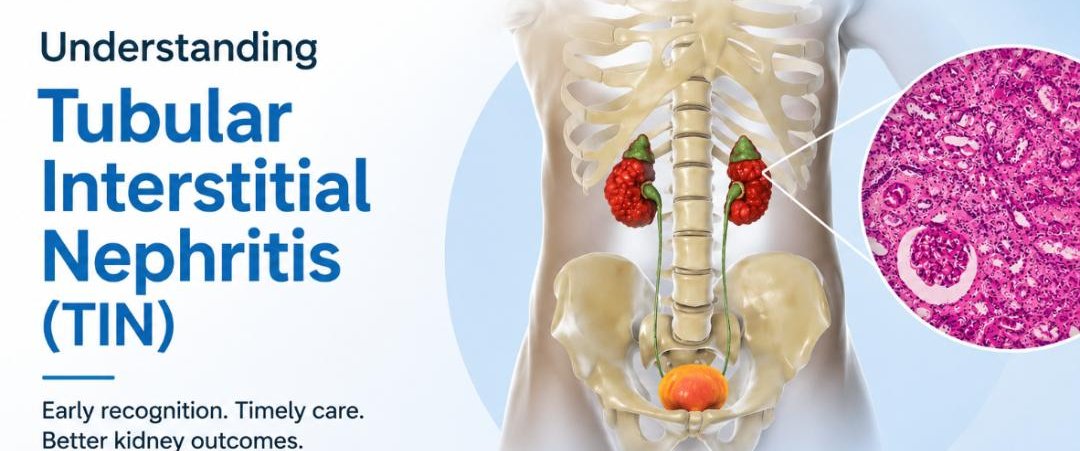
Tubular interstitial nephritis (TIN) is a condition in which the kidney’s tubules and surrounding interstitial tissue become inflamed. These structures play an important role in filtering and balancing fluids, electrolytes, and waste products in the body.
When inflammation occurs, kidney function can be affected, leading to impaired filtration and, in some cases, acute kidney injury.
What Causes Tubular Interstitial Nephritis?
TIN can be caused by several factors, but most cases are due to:
* Drug reactions (most common), especially:
NSAIDs (e.g., ibuprofen, diclofenac)
Certain antibiotics (e.g., penicillins, cephalosporins)
Diuretics and other medications
* Infections (bacterial or viral)
* Autoimmune diseases (e.g., sarcoidosis, lupus)
* Unknown causes (idiopathic cases)
Signs and Symptoms
Symptoms may vary depending on severity and cause. Common features include:
* Fatigue and general malaise
* Fever (especially in drug-induced cases)
* Flank or loin pain
* Reduced urine output in severe cases
* Blood in urine
* Increased or decreased urine output
* Symptoms of the underlying cause (e.g., recent medication use or infection)
Some patients may have only mild symptoms, and the condition is detected through routine blood or urine tests.
What Happens in the Kidney?
Inflammation affects the tubules and surrounding tissue, leading to:
* Impaired reabsorption and secretion
* Accumulation of waste products in blood
* Possible acute decline in kidney function
* Presence of white blood cells in urine without infection in some cases
Diagnosis
Diagnosis is based on clinical history and investigations such as:
* Kidney function tests (creatinine, urea, eGFR)
* Urinalysis (may show white blood cells, mild protein, or blood)
* Blood tests for inflammation
* Review of recent medications or infections
* Kidney ultrasound in some cases
A kidney biopsy may be required if the diagnosis is unclear or the condition is severe.
Treatment
Management depends on identifying and removing the cause:
* Stopping the offending drug immediately
* Treating any underlying infection
* Supportive care with fluids and monitoring kidney function
* Corticosteroids in selected cases (especially when recovery is slow or severe inflammation is present)
Most patients improve once the cause is removed, especially if diagnosed early.
Possible Complications
If not treated promptly, TIN may lead to:
* Acute kidney injury
* Persistent kidney dysfunction
* Progression to chronic kidney disease in severe or delayed cases
Conclusion
Tubular interstitial nephritis is an important but often reversible cause of kidney injury. Early recognition, stopping the offending agent, and appropriate medical care are key to recovery. Patients with recent drug use, infection, or unexplained kidney dysfunction should be evaluated promptly to prevent long-term kidney damage.
Blanchard nephrology 2026.