Introduction
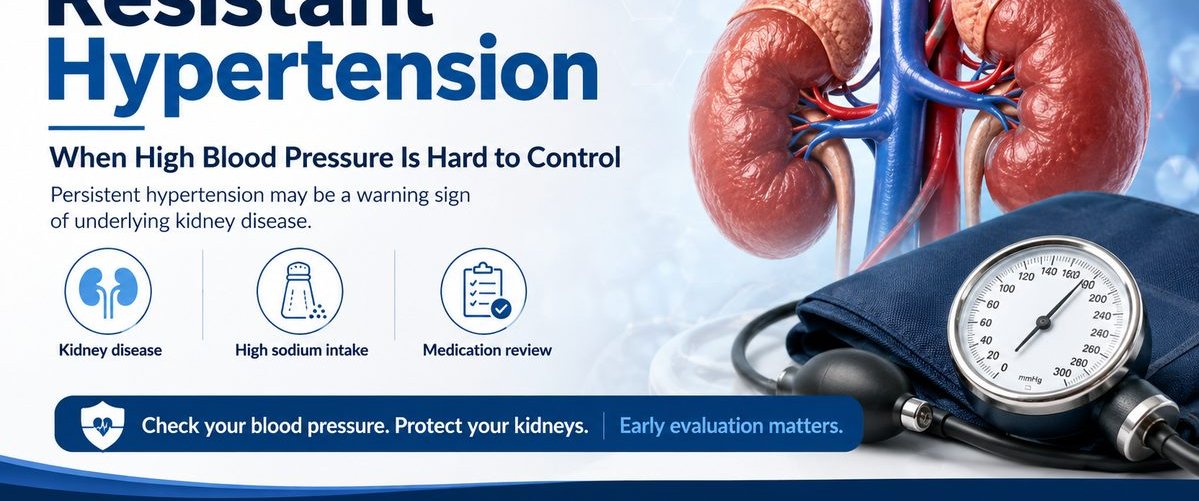
High blood pressure is common, but for some people, controlling it can be particularly difficult. Blood pressure may remain above the recommended range even after lifestyle changes and the use of several medications.
This condition is known as resistant hypertension. It is important to investigate because persistent high blood pressure can damage blood vessels throughout the body, including those that supply the kidneys. At the same time, kidney disease can contribute to worsening blood pressure, creating a cycle that can become increasingly difficult to control.
What Is Resistant Hypertension?
Resistant hypertension describes high blood pressure that remains difficult to control despite appropriate treatment with multiple blood pressure medications.
When blood pressure continues to stay elevated, healthcare providers may look beyond routine hypertension management to determine whether another medical condition, medication, lifestyle factor or kidney-related problem is contributing to the elevated readings.
Finding the underlying reason is important because simply adding medications may not address the actual cause.
Why Are the Kidneys Important in Blood Pressure Control?
The kidneys play an important role in regulating blood pressure by controlling fluid levels, sodium balance and several hormones involved in blood vessel function.
High blood pressure can narrow and damage the blood vessels within the kidneys. When the kidneys are unable to remove excess fluid and sodium effectively, blood pressure can rise even further.
This creates a harmful cycle: high blood pressure damages the kidneys, and declining kidney function can make blood pressure more difficult to control.
For this reason, persistent or difficult-to-control hypertension may require an evaluation of kidney function.
Possible Causes of Resistant Hypertension
There are several reasons why blood pressure may remain elevated despite treatment.
Possible contributing factors include:
- Chronic kidney disease
- Narrowing of the arteries supplying the kidneys
- Hormonal disorders that affect blood pressure
- Obstructive sleep apnea
- Obesity
- High dietary sodium intake
- Excessive alcohol consumption
- Certain prescription and over-the-counter medications
- Supplements or stimulants that can raise blood pressure
- Difficulty taking medications consistently as prescribed
The American Heart Association notes that healthcare professionals evaluating resistant hypertension commonly investigate conditions affecting hormones, kidney blood vessels, sleep, weight, medications and lifestyle factors.
Resistant Hypertension May Not Cause Symptoms
One of the challenges of hypertension is that it frequently causes no obvious symptoms.
A person may feel completely well while their blood pressure remains significantly elevated. Early kidney disease may also develop without noticeable symptoms.
This is why regular blood pressure checks and appropriate kidney testing are especially important for people with persistent hypertension.
As kidney disease becomes more advanced, symptoms may include swelling of the feet or ankles, changes in urination, fatigue, nausea, difficulty concentrating or shortness of breath. These symptoms are not specific to kidney disease and should always be evaluated by a healthcare professional.
How Is Resistant Hypertension Evaluated?
The first step is confirming that blood pressure is truly remaining elevated.
Blood pressure can vary throughout the day and may sometimes be higher in a medical office than it is at home. Healthcare providers may therefore recommend:
- Repeated office blood pressure measurements
- Home blood pressure monitoring
- 24-hour ambulatory blood pressure monitoring
Ambulatory blood pressure monitoring uses a small automatic device that records blood pressure throughout the day and night. This can provide a clearer picture of a patient's usual blood pressure pattern.
Additional testing may include:
- Blood tests to assess kidney function and electrolytes
- Urine testing for albumin or protein
- Review of current medications and supplements
- Evaluation for hormonal conditions
- Assessment for sleep apnea
- Imaging when kidney artery disease or another underlying condition is suspected
Kidney disease is commonly assessed using blood testing that estimates glomerular filtration rate (GFR) and urine testing for albumin.
Treatment
Treatment depends on why the blood pressure is difficult to control.
A healthcare provider may adjust medication combinations, change doses, address an underlying medical condition or recommend lifestyle changes.
Management may include:
- Taking blood pressure medications exactly as prescribed
- Reducing dietary sodium
- Maintaining a healthy weight
- Staying physically active when medically appropriate
- Limiting alcohol intake
- Stopping tobacco use
- Managing diabetes
- Treating sleep apnea when present
- Reviewing medications that may raise blood pressure
- Monitoring kidney function regularly
For patients with kidney disease, controlling blood pressure is one of the most important ways to help protect remaining kidney function. Certain blood pressure medications, including ACE inhibitors and angiotensin receptor blockers (ARBs), may also help slow kidney disease in appropriate patients. Medication choices should always be individualized by the treating healthcare professional.
Be Careful With Over-the-Counter Medications
Not every medication that affects blood pressure comes from a prescription.
Certain over-the-counter medicines and supplements can increase blood pressure or affect kidney function. These may include some nonsteroidal anti-inflammatory drugs (NSAIDs), decongestants, stimulants and products containing large amounts of sodium.
If your blood pressure is difficult to control, tell your healthcare provider about all medications, supplements, vitamins and herbal products you use.
Do not stop a prescribed medication without discussing it with your healthcare provider first.
When Should You See a Kidney Specialist?
A nephrology evaluation may be appropriate when:
- Blood pressure remains high despite several medications
- Kidney function is declining
- Protein or albumin is found in the urine
- There is unexplained swelling or fluid retention
- Secondary hypertension is suspected
- Kidney artery disease is being considered
- Hypertension occurs together with chronic kidney disease
Specialist evaluation can help determine whether the kidneys are contributing to the blood pressure problem and guide an individualized treatment plan.
Protecting Your Blood Pressure and Your Kidneys
Blood pressure and kidney health are closely connected. Protecting one often helps protect the other.
You can support your health by:
- Checking your blood pressure regularly
- Knowing your kidney function results
- Taking medications as directed
- Reducing excess sodium
- Managing diabetes and other health conditions
- Avoiding tobacco
- Discussing over-the-counter medications with your healthcare provider
- Keeping regular medical appointments
Consistent monitoring allows changes in blood pressure or kidney function to be identified before more serious complications develop.
Conclusion
Resistant hypertension should not simply be viewed as blood pressure that needs another medication. Persistent hypertension may signal an underlying condition, including kidney disease, kidney artery problems, hormonal disorders, sleep apnea or other contributing factors.
Because uncontrolled high blood pressure can progressively damage the kidneys, heart and blood vessels, identifying the cause and developing an appropriate treatment plan is essential.
At Blanchard Nephrology, we provide comprehensive evaluation and management of hypertension and kidney disease, including care for complex and difficult-to-control blood pressure.
If your blood pressure remains elevated despite treatment or you are concerned about your kidney health, speak with your healthcare provider or contact Blanchard Nephrology for further evaluation.
Blanchard Nephrology
655 Fox Run Rd, Suite C
Findlay, OH 45840
567-525-3163
Compassionate kidney care focused on protecting your health for the long term.